Five Edge AI Assumptions Worth Stress-Testing Before You Push Inference to the Perimeter

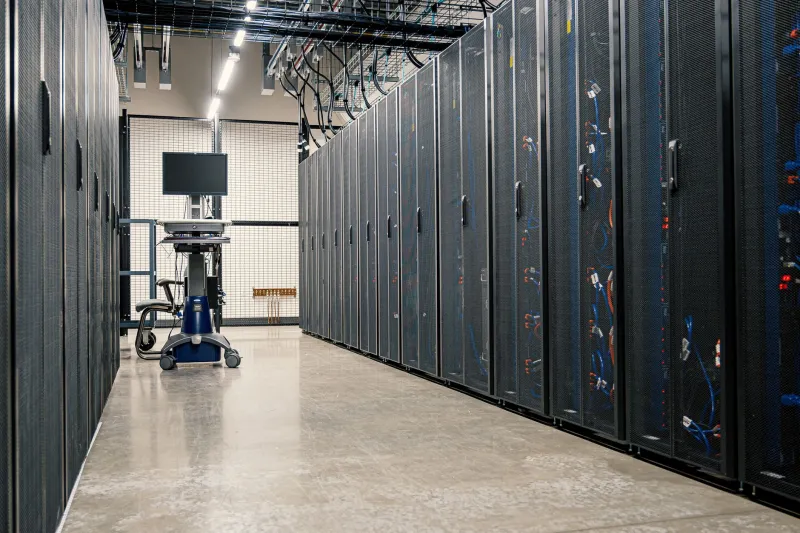
Photo: edge computing hardware enclosure installed in retail store backroom, via upload.wikimedia.org
The pitch is now familiar enough to recite from memory: inference belongs next to the data, the cloud round trip is too slow, and any enterprise that does not push models to the perimeter will be structurally uncompetitive within two years. It is a clean argument. It is also, in a surprising number of US enterprise environments, the wrong one.
This is not an argument against edge inference. It is an argument against buying it on the strength of a diagram. Below are five assumptions that show up in nearly every edge AI business case, along with the tests that separate the ones that hold from the ones that quietly cost a fortune.
Assumption one: latency is the binding constraint
The first thing to check is whether network time is actually the problem. In most enterprise applications, the round trip to a regional cloud is tens of milliseconds, while the model itself takes hundreds. Moving inference to the perimeter improves the portion of the budget that was never dominant, and the improvement frequently disappears inside the noise of a mobile client, a browser render, or a legacy API gateway that no one has profiled since 2021.
A useful test is end-to-end decomposition. Instrument the request from user action to rendered result, break it into network, queueing, preprocessing, inference, and postprocessing, and see what fraction of the p95 belongs to the trip. If the network is under a third of the total, edge deployment is optimizing the wrong term. Rural and exurban footprints change this calculation in ways urban pilots miss, and any US deployment spanning multiple states should measure both.
Assumption two: hardware refresh and model refresh are the same rhythm
Edge hardware is bought on a four-to-six year cycle. Frontier models and even modest fine-tunes are revised on a cycle measured in months. Every revision that exceeds the deployed device's memory, compute, or thermal budget either gets frozen out or triggers a fleet-wide refresh that no one budgeted for.
Test this by asking a plainly uncomfortable question: what happens to this device when the model is 30 percent larger and needs twice the throughput? If the answer involves a hardware swap across a few thousand sites, the total cost of ownership curve is a staircase, not a slope, and it needs to appear in the business case.
Assumption three: the edge is a smaller version of the cloud
Perimeter environments lack the things that make cloud inference cheap to operate — elastic capacity, mature observability, seamless blue-green deployment, and a security team within walking distance. Every one of those gaps is filled by operational labor, and labor does not scale down with device count. It scales with the number of distinct site configurations, which is usually the number of sites.
A practical stress test is to count the variations. How many distinct hardware revisions, network profiles, and power conditions exist across the estate? How many will be added by the next acquisition? The operational burden of edge inference is roughly proportional to configuration diversity, not to model complexity.
Assumption four: data gravity stays put
Edge inference is often justified on the grounds that data never has to leave the site. In practice, the data that trains the next model still has to travel, the predictions and their confidence scores have to travel, and the audit trail has to travel. What frequently changes is not the volume of data leaving the site but the number of places from which it originates and the number of pipelines that must be governed.
Enterprises that have spent years consolidating pipelines find that edge inference re-fragments them, and the governance work lands on the same team that was told the move would reduce data movement. Test it by tracing the full lifecycle of a single prediction, from sensor to retention policy, and count the systems of record it touches.
Assumption five: edge deployment shrinks compliance scope
Keeping data local does not automatically keep an organization outside a regulatory perimeter. Payment card data, health information, and consumer records carry obligations that follow the data to the site, and a store backroom is a harder place to evidence physical and logical controls than a region with a documented control set. Meanwhile the fleet itself becomes a new attack surface that has to be inventoried, patched, and monitored.
A reasonable test is to hand the deployment to the auditor before it is built. Ask which controls move, which controls are duplicated, and which evidence becomes harder to produce. If the answer is that everything is now evidenced by site visits, the compliance cost belongs in the model.
A decision framework that survives contact
Five questions, scored honestly, will place most workloads correctly.
What share of p95 latency is network transit? Under a third, and the edge is optimizing the wrong term.
How often will the model materially change? Faster than the device refresh cycle, and the fleet becomes a treadmill.
How many distinct site configurations exist? Beyond a few dozen, operations cost grows faster than the latency benefit.
What must leave the site regardless? Training data, predictions, audit evidence. The egress reduction is usually smaller than projected.
Can the control set be evidenced from a central team? If not, the compliance burden moves rather than disappears.
When latency transit dominates, model cadence is slow, the fleet is homogeneous, and the site is genuinely disconnected from reliable connectivity, edge inference is straightforwardly correct. Manufacturing lines, retail loss prevention, and remote field operations in low-bandwidth parts of the country fit that profile well. When those conditions do not hold, a regional cloud tier — closer than the primary region, governed centrally, still elastic — frequently delivers most of the benefit at a fraction of the operational cost.
The honest strategic question is not whether edge AI is real. It is whether the workload in front of you is an edge workload or simply one that has not been profiled carefully enough to know.