Skewed: A 2026 Buyer's Checklist for Time Synchronization Across Cloud, Edge, and On-Prem
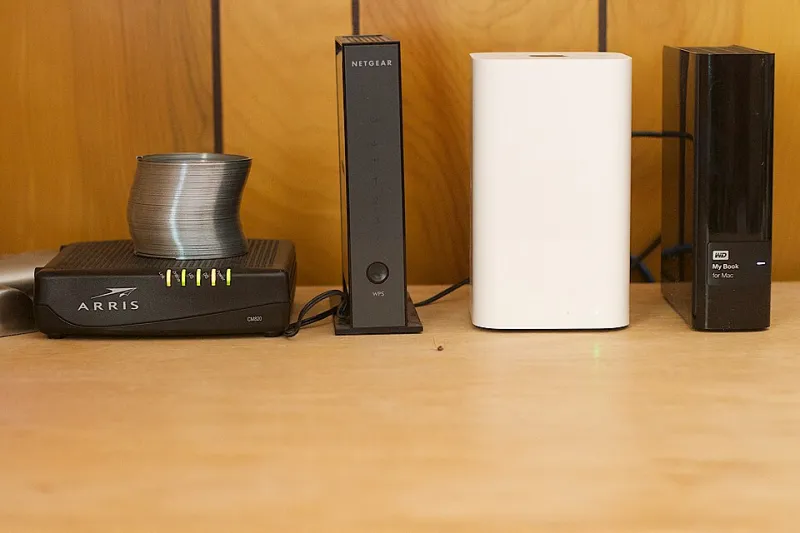
Photo: Alan Levine, CC BY 2.0, via Wikimedia Commons
Every enterprise architecture diagram has an invisible arrow labeled time. It never appears in the legend, it has no owner in the RACI chart, and it does not show up in the capacity plan. Yet event ordering, audit evidence, certificate validation, and cross-region settlement all rest on that arrow. When it bends, systems rarely fail loudly. They fail in ways that take three weeks and a room full of people to explain.
Treating the clock as ambient infrastructure was defensible when workloads lived in one data center and a few milliseconds of drift never reached a customer. Distributed design removed that margin. A single transaction now touches a cloud region, a colocation cage, and a rack in a retail store, each carrying its own time source and its own idea of now. The 2026 procurement cycle is a reasonable moment to stop assuming and start specifying.
The clock is a dependency, not a utility
Time enters an architecture the way electricity does: invisibly, continuously, and with an expectation of perfect availability. The difference is that a power sag trips a breaker, while a clock fault produces a log line with the wrong timestamp and a record that lands in the wrong partition. Nobody pages anyone. The damage surfaces later, during a reconciliation, an audit, or a dispute over which of two writes actually happened first.
That makes time unusual among infrastructure dependencies. It has no natural alerting threshold, no obvious owner, and no intuitive cost. Buyers who treat it as a line item rather than a background condition tend to be the ones who avoid the six-figure forensic exercise eighteen months later.
Where skew turns into business risk
Four categories cover most of the exposure in a US enterprise footprint.
Regulatory and audit evidence. Financial services firms operate under explicit clock requirements. FINRA rules require member firms to synchronize business clocks to within 50 milliseconds of the time maintained by the NIST atomic clock, and records-retention obligations under SEC Rule 17a-4 assume timestamps that can be defended. Payment processors working under PCI DSS need log correlation across systems that may sit in four different time zones. If two systems disagree by two seconds, the incident timeline becomes an argument instead of a record.
Security controls. Kerberos tolerates roughly five minutes of skew before authentication fails outright, which means a well-behaved cluster can lose its ability to authenticate during a time-source outage. Token lifetimes, certificate validity windows, replay protection, and signed request expiry all assume clocks that agree. Time is a security control that rarely appears in the security architecture document.
Data correctness. Last-write-wins conflict resolution is a timestamp comparison wearing a costume. Time-to-live expiry, cache invalidation, time-windowed stream joins, and time-based log retention all degrade gracefully right up until they do not. Ordering errors are also the hardest class of defect to reproduce, because reproducing them requires reproducing the skew.
Commercial measurement. SLA credits, usage meters, billing intervals, and rate limiting windows are all computed against a clock. A provider-side leap second handling difference or a drift event can move usage across a billing boundary, and the reconciliation cost lands on your finance team rather than theirs.
The checklist
1. Inventory the consumers, not the servers. List every system that compares timestamps across a boundary: databases, message brokers, identity providers, log pipelines, billing engines, settlement systems, OT and IoT gateways. The inventory should name an owner for each.
2. Assign tolerance tiers. A workable four-tier model: sub-millisecond for trading, industrial control, and high-resolution event ordering; single-digit milliseconds for distributed databases and stream processing; sub-second for log correlation and security event timelines; best effort for everything else. Tiers drive spend, so be honest about which tier each consumer actually needs.
3. Require traceability, not just sync. Ask vendors to document the chain from their time source to a national standard. An appliance that says it uses NTP is not the same as one that can prove traceability to UTC through NIST-traceable references.
4. Count the single points of failure. Many estates have exactly one stratum-1 source, often reachable only through one network path. GNSS receivers are susceptible to jamming and spoofing, which is no longer a theoretical concern near ports, airports, and data center corridors. Ask what happens on day three without a reference signal.
5. Budget for holdover. The oscillator is the part of time infrastructure that keeps working when everything else stops. Temperature-compensated crystals hold accuracy for hours; oven-controlled oscillators hold it for days at several times the price. Buy holdover to match your recovery time objective for time itself, not to match your hardware refresh cycle.
6. Decide a leap-second posture. Stepped versus smeared leap seconds produce measurably different timestamps across providers. Pick one, document it, and confirm that every upstream source and downstream consumer agrees with the choice.
7. Instrument offset, not status. A green indicator that says synchronized tells you nothing about accuracy. Export the measured offset, the estimated error bound, and the age of the last valid reference as first-class telemetry with alerting thresholds tied to each tolerance tier.
8. Inject skew in pre-production. Testing tools can advance or retard a node's clock by defined amounts on a schedule. Run the ordering tests that matter with deliberate skew and confirm the system fails in a way you can observe rather than a way you can only infer.
9. Write the runbook for time failure. Most teams have a runbook for losing a region and none for losing a reference clock. The latter should specify degraded-mode behavior, which consumers to freeze, and who authorizes stepping a clock backward.
10. Put it in the contract and in the drill. Cloud time services are convenient but rarely guarantee the accuracy your application tolerance assumes. Negotiate disclosure of holdover behavior and leap-second handling, and then test it during the next disaster recovery exercise rather than discovering it during an outage.
What to do with the numbers
Once tolerances are tiered, the spending conversation becomes tractable. Sub-millisecond consumers justify dedicated PTP hardware, redundant GNSS with disciplined holdover, and a second geographically separate reference path. Sub-second consumers usually justify nothing more than a monitored, redundant NTP hierarchy with alerting on offset. The middle tier is where most enterprise budget lands, and it is also where most of the avoidable incidents originate.
The point of the checklist is not to buy more clocks. It is to make an invisible dependency visible enough that someone owns it before it owns you.